
empathy vs reciprocity
reciprocity's alkahest and the cycle of civilization

throughout the west, socially, economically, and ideologically, through taxes on wealth and rent control and preferential cultural imposition and totalitarian wars on the very idea of history, the mamdanis and marxists and pretty word collectivist/socialists are currently starting to sprint out of their long marches through once trustworthy institutions that long served the west well.
this has destroyed these institutions and inverted their purpose and it will keep getting worse until it is stopped.
i propose a theoretical framework to assess both the structure and what must be done if we are to avoid dictatorship:
reciprocity: the agreement to treat others as you yourself would be treated and to consent to be bound by social contract to respect the liberty and property of those with whom you share a society that, in turn, you will be protected by this contract, secure in your own liberty and property. this is the engine of golden rule society, begetter of golden ages. it’s the essence and praxis of high trust and the underpinning of the emergent structures most conducive to human freedom and flourishing. applied too vigorously or stringently, it can become vicious, but without it, you’re simply not going to be building much.
empathy: the ability to consider the position of another and to act sympathetically and generously toward them. this is, in many ways, a final form of flourishing, a value unto itself. without empathy, a society becomes oppressive and hostile and feels morally vacant. but, however desirable, it is also a luxury and potentially a cost. overmuch empathy becomes societal solvent, reciprocity’s alkahest. nothing can be built and nothing built before can stand.
these two ideas stand in both consonance with and opposition to one another.
like so many things, it’s about a balance.
reciprocity without empathy becomes nasty legalism and feels inhuman.
empathy without reciprocity becomes predation and wreckage. you get eaten.
in a high trust, golden rule society empathy and reciprocity basically lead to the same place; they are very difficult to tell apart.
this is likely why such societies (to their great peril) so often come to conflate and confuse them.
but this overlap is a rare position and one that can only exist among a very specific and curated sort of people, hard won and easily lost.
in a perfect world, there is no trade off between them.
but no world is perfect.
only those truly committed to the golden rule are suited to be ruled by it. it suffices for no others.
i suspect this is what gives rise to the civilizational cycle.
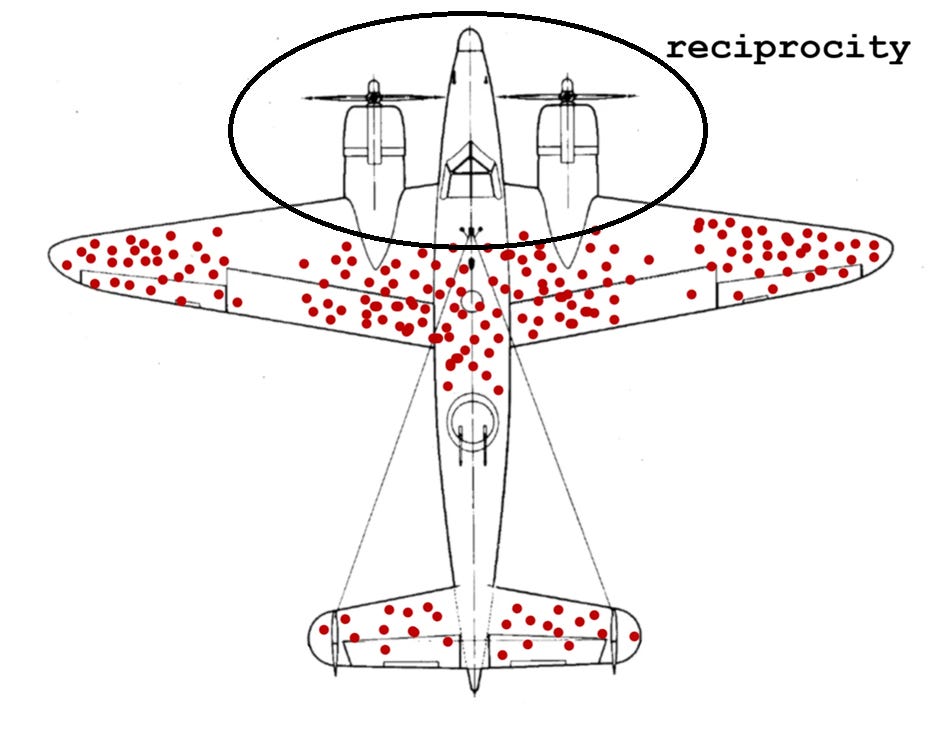
to carve civilization from barbarism and elevate social contract from the war of all against all takes a powerful sense of reciprocity - i keep my word so you keep yours, i respect your property and liberty so you respect mine - it is, in early stages, not terribly tolerant of empathy.
it cannot be.
it lacks the structure and practice, the institutions and culture to be.
it needs to generate a society where large numbers of people repeatedly decline to defect in a massively manysided iterative prisoner’s dilemma. you cannot do this if you keep allowing people to hurt you or take your stuff “cuz reasons” and “you need to feel bad for me.” once thriving, a social contract has benefits that are obvious, but early on, it feels mostly like cost. getting over that hump requires real penalties and exclusion for defectors.
it’s stern, but that’s life:
one does not build with empathy. one builds such that one may one day be able to afford it.
high trust society is a high equilibrium. allow any meaningful amount of consistent defection and high equilibrium is unachievable. so you cannot build a civilization that way. in a sense, the selection bias embeds a requirement for a certain sort of people, those able to pass this test and no others. fail to do this and you fail to flourish. critical mass will not be found.
the purpose of building such a civilization is human flourishing and freedom, freedom to thrive, freedom from fear. the more it succeeds the more empathetic it can be. “cuz reasons” can be OK as the reasons fit into the general milieu and are not taken too far. at apogee in a perfect utopian social contract, empathy and reciprocity are the same thing because all the actors are high trust, all do unto others as they would have done unto themselves, and thus all actions are moral, respect rights, and allow liberty. the venn overlap of empathy and reciprocity becomes a single circle.
obviously, that’s unattainable in platonic form, but you can get close enough that the cost of empathy to the integrity of the social contract is manageable and emerges as benefit. good people like empathy. it feels good to give and to get. like other facets of the human experience like love and generosity, empathy is an end unto itself, a boon to the giver intrinsic to the act. to be free to live in that way is a wonderful things. but, like these other things, it’s also a vulnerability and therefore must reside within a sort of goldilocks zone where too little makes a life feel miserly and impoverished but too much gets one eaten alive and pulls down the structures of high trust flourishing golden rulery and contract.
and this comes down to people.
not all people believe in reciprocity. not all are capable of it and many would not adhere to it even if they were. most of the world thinks it’s outright stupid. why would i give when i can take? that is the sign of a weak man, a weak tribe, a weak political movement.
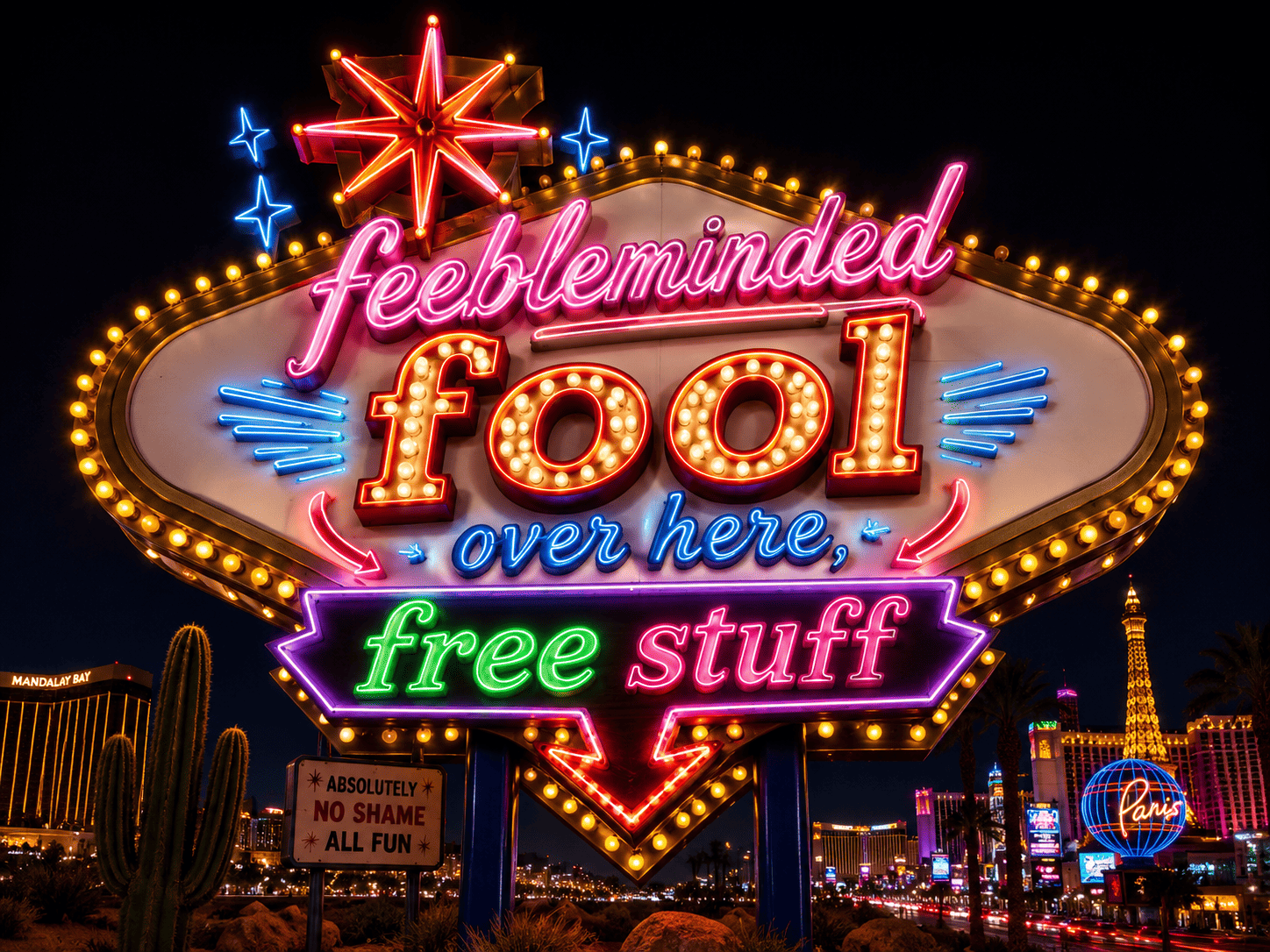
they see the outreach of empathy and reciprocity as a glaring neon sign that says “feebleminded fool over here, come hurt him and take his things.”
this is how you rally armies of takers at home and summon them from abroad.
they take advantage of those seeking to be their best selves in order that they themselves may be their worst.
in the presence of such people, the practice of empathy becomes entirely antithetical to the idea of reciprocity; it demands to give endlessly to those who will only take. the presumption that such seagull armies of french fry filchery can somehow become a loyal follower class who will stay in line behind the party that feeds them is how empires die.
the seagulls do not care about the power of their patron, they care about the power of their tribe, their faction, their in-group or party, of their own greedy selves. and they stay in line only until leaders depend upon them, then they force their way to the head of the line and take over. worse, their mere presence in the system makes the perpetuation of the high trust systems of social contact impossible.
these intruders and ideologues bring neither vigor nor growth; they inhibit flourishing. you can see it in data after data. they suck the dole dry and provide plunderous gravel in the gears of economic and social function. economies falter. public spaces grow unpleasant and unsafe. you’re breeding and importing rats to improve the granary. it only ends one way.
the third world is not the third world because it lacks resources or land or access to modernity. it has all those things. it cannot develop because those who live there will not let it. what anyone manages to produce, they take, what anyone manages to build, they pull apart. nothing springs from such soil and there is nothing magic about first world dirt. when you plow this sort of politico/cultural salt into its fields, they too fall fallow and the “second world,” a term once used to describe the soviets but which stands equally apt as descriptor of any high trust system taken over by low trust people, awaits.
i get the sense of a pendulum that swings faster toward the ends and that “how did your society go to hell in a bucket?” works a lot like the way hemingway answered “how did you go bankrupt?”
much of the west is reaching the “suddenly” part where the disaster curve gets steep.
collectivism is a grave assault on this idea, empathy and taking at the point of a gun.
it’s when the seagulls gang up and seize the french fry factory.
high trust has a tipping point where the system goes from high function to low function and it happens in a hurry.
there is empathy for the wrecker but not for the builder. the former winds up protected, the latter bound, neither in any form of reciprocity.
and a social contract must be a reciprocal or lose all justice.
protected but not bound is a license for predation.
bound but not protected is slavery.
one sees this manifest in many ways.
the taker gets free housing and food and the builder gets taxes at the point of a gun.
the one who complains of the rape faces more punishment than the rapist.
that is empathy turned toxic dissolving the structure of reciprocity and the possibility of golden ages.
the social contract breaks.
the price of empathy soars.
and that changes the game at a fundamental level.
a system where wreckers have rights and builders have obligations winds up, functionally, as a form of indentured servitude and subjugation whereby the better angels of human potential are tyrannized by whatever demons are best at crying hurt.
it does not take a hayek or a friedman to see how that unravels.
this is how it seems to systematize:
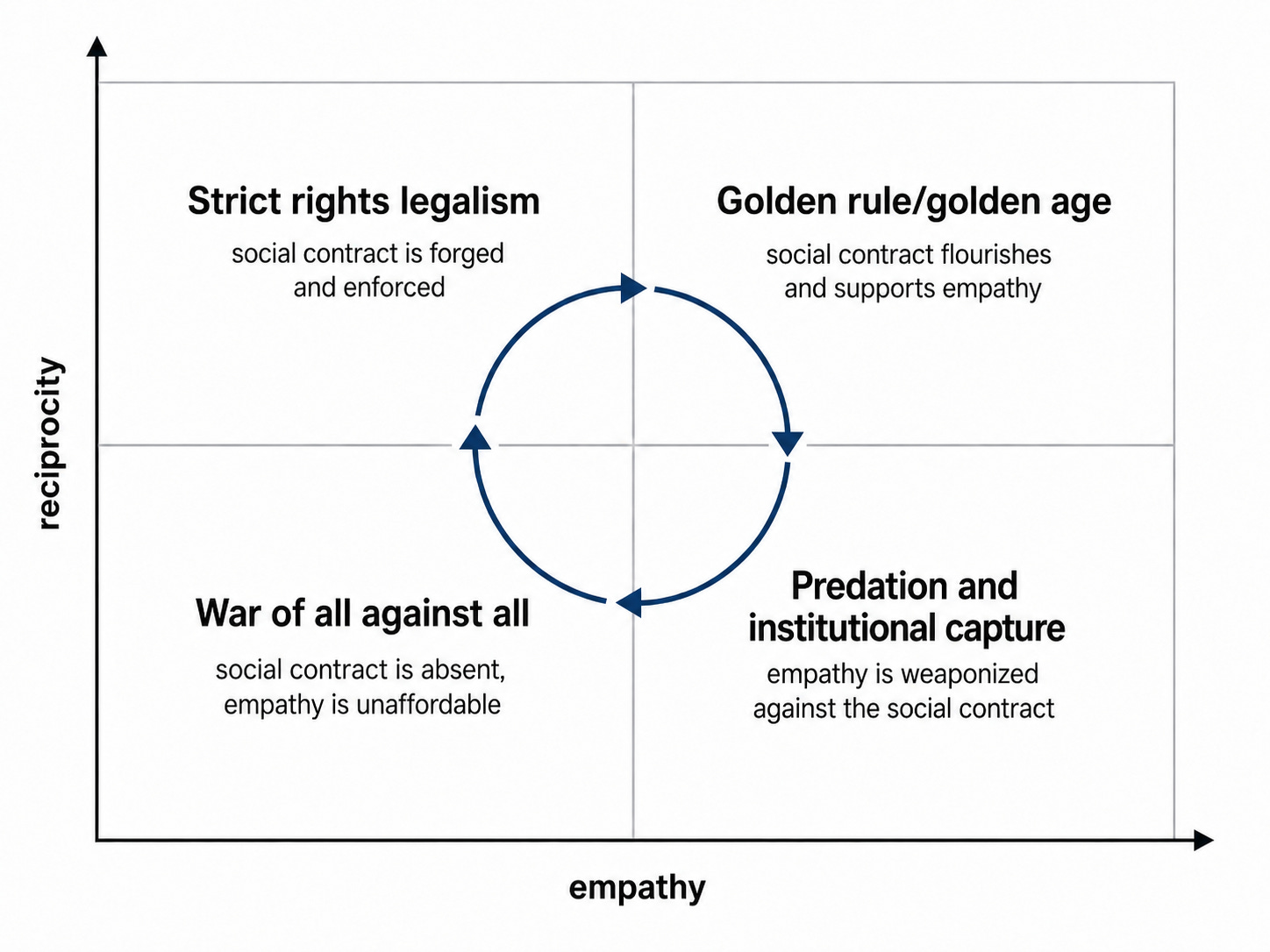
perhaps worst of all, it hurts. it takes “empathy,” a thing high trust people have come to value and enjoy, and pushes it to near total separation from “morality” because those who become the subject of sympathy are the takers and despoilers, seagulls who see reciprocity as a category error in the mindsets of people who have french fries that look tasty.
and it sucks.
eventually, this divergence causes a sort of ethical inversion where the definition of empathy must shift. it leaps from sympathy for the wrecker to sympathy for those the wrecker bedevils, it shifts from “cuz reasons” to “reciprocity of rights and strict adherence” as end state and “oh, but you were needy/disadvantaged” gives way to empathy for the high trust people who lost their entire way of life and the flourishing systems they built.
if this fails to happen, the civilization dies.
if and when it does, the cycle starts again, elevating golden rule society and social contract out of the barbarism that the overly empathetic allowed within the gates.
there is no direct move from the lower left quadrant back to the upper right. that is the most insidious part of the trap.
everyone wants to go back to the upper right. “why can’t we have empathy and reciprocity? we used to!”
well, you can’t because you lost reciprocity and that turned empathy toxic. the reboot has an order and you cannot alter the steps. adding empathy without first reaching reciprocity just feeds the takers and digs the hole deeper.
only reforging the social contract can stop the bleeding and restore the trust that once more makes empathy feasible.
those rendered buttercups by times of plenty and safety and trust are going to need to toughen up.
a social contract is not a document, it is a people.
and only a hard people can rebuild the structures that lead to soft times.
and how rapidly people can figure that out is what determines how long you have to stay in lower left and how bad it gets.
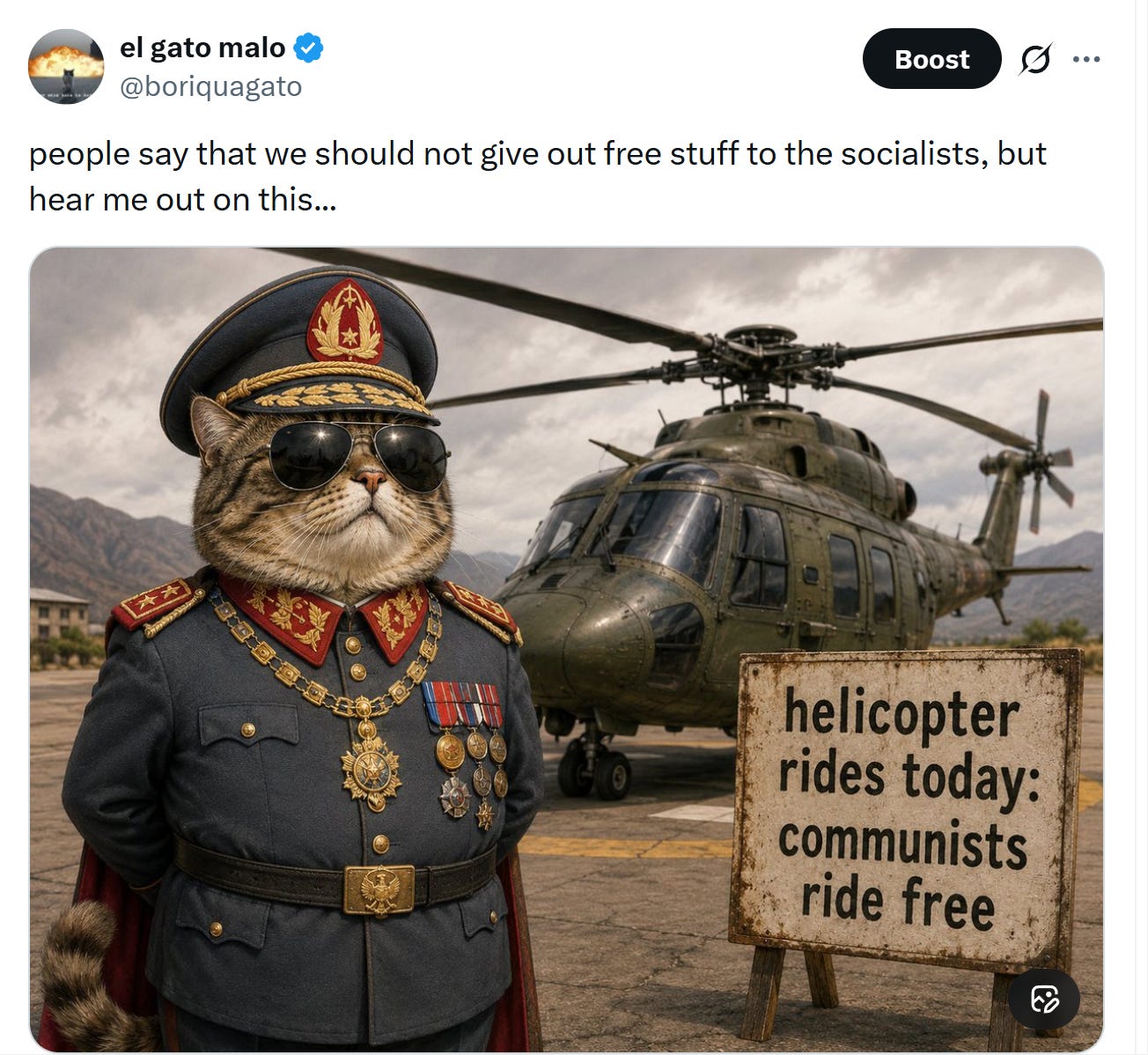
this part is often a bit rough the outrages and institutional capture that come from over-institutionalization of empathy are, by their very nature, difficult to dig out and good at screaming “i am the victim here!” when you seek to take away their right to victimize you by playing upon your better nature.
it feels like being mean. they are good at making it seem so.
it’s the big lie of ideas like “communism” where “give everyone free stuff” feels like empathy until you realize it means we all have to live in cold water hovels and stand in breadlines to support a tiny “dacha class” that suppresses and murders anyone who raises ideas about “sympathy for the society we wrecked and what we used to have.”
this is WHY the collectivist tyrants call you mean and cast their own predation as virtue. they use their lack of empathy and reciprocity to prey upon yours, inviting you to mistake their takings for your sympathy and forgetting the reciprocity that underpinned it, demanding to be animals more equal than you are and calling you mean, and bigoted, and antisocial for seeking to protect the individual, for seeking to protect yourself.
individually misplaced empathy is “being a chump.”
society-scale weaponized empathy is a civilizational WMD.
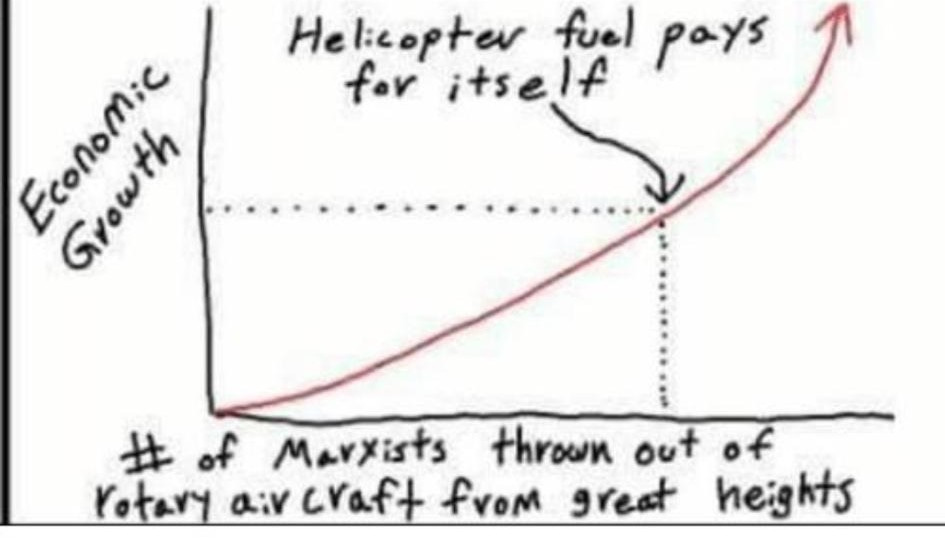
and, apart from dictatorship or barbarism, there is no way out of it apart from returning to hard demands for reciprocity.
the price will be a (temporary) loss of empathy.
it is a price worth paying.
it’s an investment in the future.
The quote by John Adams, "Our Constitution was made only for a moral and religious people. It is wholly inadequate to the government of any other," carries profound meaning and holds great importance in understanding the foundation of our republic. Adams, one of the founding fathers of the United States, was expressing his belief that the successful functioning of the Constitution relies on the virtuous and ethical nature of the people it governs. In a straightforward interpretation, Adams is highlighting the necessity for a moral compass and religious principles in the individuals who govern and are governed. He suggests that a constitution alone, no matter how well-crafted, cannot secure the stability and prosperity of a nation without the active participation of virtuous citizens.
"seagull armies of french fry filchery"
You're in fine form today, Gato.