
population decline can be fine
how i learned to love the anti-malthusian ethos

stop me if you’ve heard this one before:
we need more population! we cannot have fewer children or fewer people! it’s a demographic disaster!
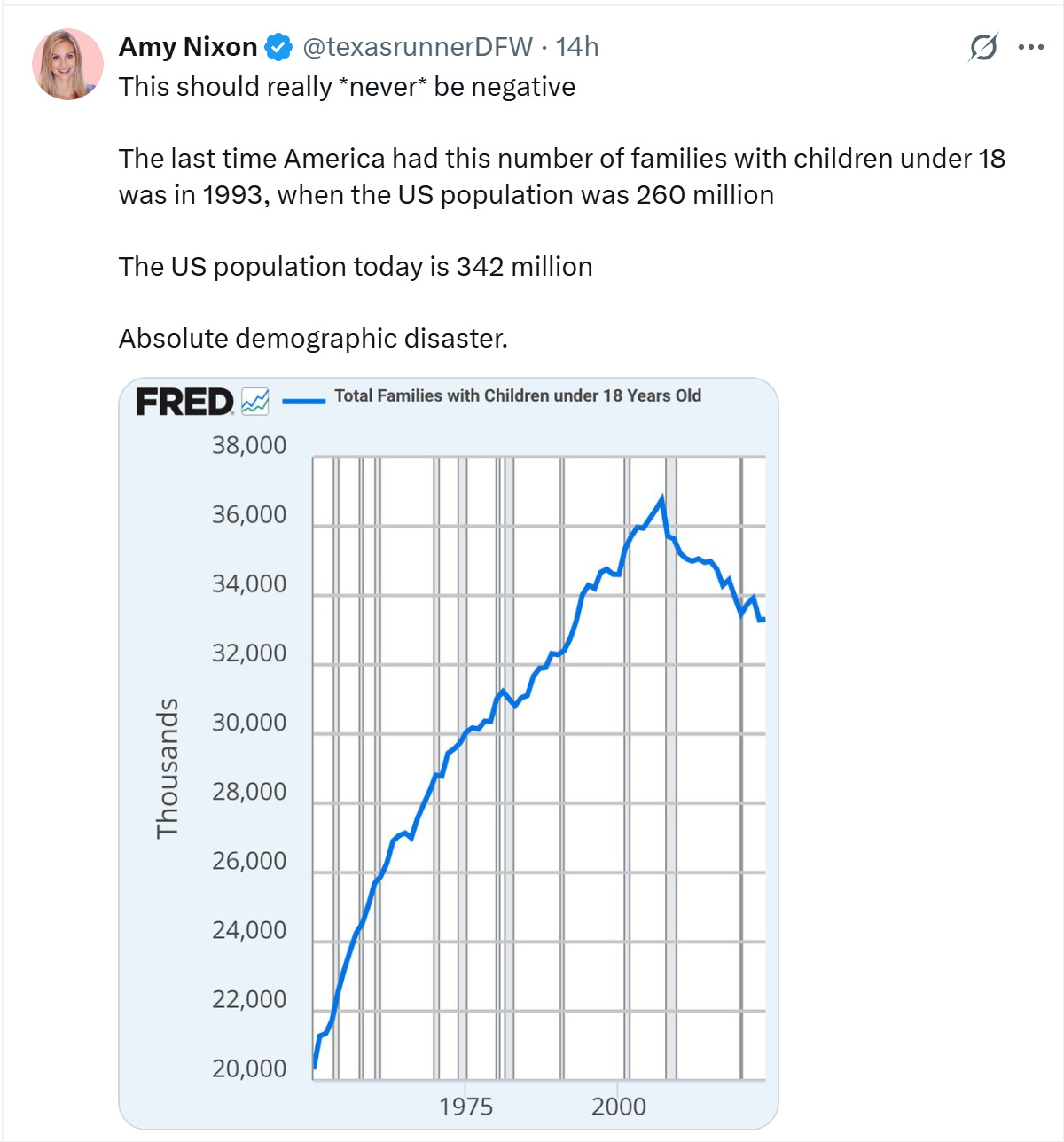
but is it? why?
many of the same people were, about 5 minutes ago, screaming about malthus and ehrlich and running out of stuff and “there are too many of us!” population bombs.
obviously, none of that happened.
it was just people who do not understand adaptive systems taking exponential processes and extending them to infinity until they looked like inevitable doom.
and now they do the same but using inverse exponentials toward zero until, wait for it, they look like impending doom.
but this too is nonsense.
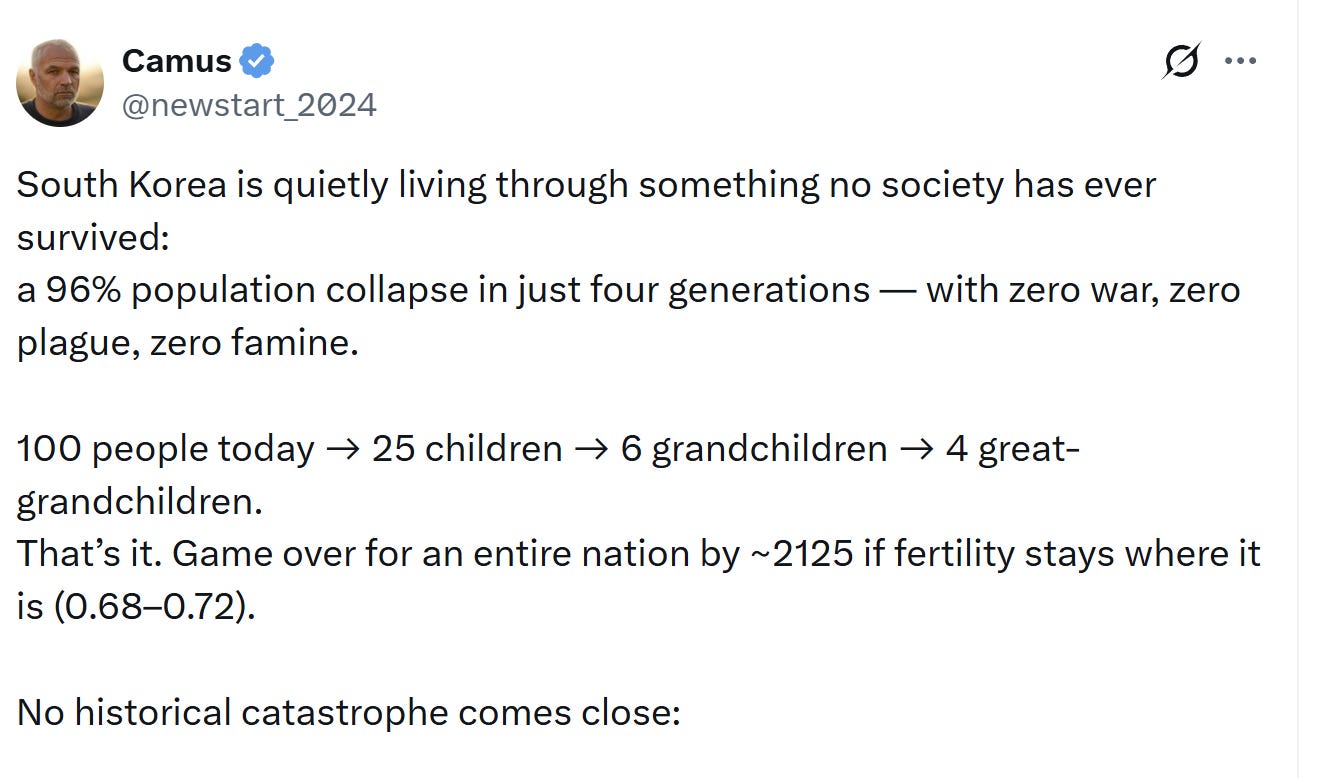
are we seriously to believe that no matter how cheap land and housing become that people will not change their behavior?
or that people do not, perhaps, have some sense of what “optimum” population or population density should be?
lots of species stop breeding when they feel overcrowded.
are we sure humans are any different?
people talk about how the US was better in the 1990’s (or even the 1950’s) but somehow they get the vapors about the US reverting to anything resembling the number of people we had then.
why?
how do we know it wasn’t preferable?
we have 350 million people now (likely more if you counted illegals fully). in 1990? 253 million. 28% fewer. in 1950, we had 154 million, 66% fewer.
what’s the right number of people for america to be wonderful?
how would anyone even arrive at such a number much less be so confident of it that they were sure that we needed to open floodgates of immigration to make up for low US birth rates?
and why is anyone convinced that flooding the US with immigrants and immigrant labor does not further depress US fertility rates by driving up home and food prices, pushing down wages, and swamping schools?
the evidence on “flood the place with people when the people who live there already feel crowded” is actually pretty decent. Build Baby Build: how housing shapes fertility.
not that this stops anyone.
the answer always seems to be “because we need to support GDP!” but i’m going to let you in on a little secret:
population growth is the most overrated economic idea in the world and you can thrive with a stable or even declining population if your underlying system is good.
life can be wonderful. population decline can be fine and what people really respond to and perceive as “the good life” is not just rampant growth in aggregates: they care about the life and lifestyle that they get to have.
the best gross stat for this is per capita GDP measured at PPP (purchasing power parity). this measures a country’s output per person and then adjusts it for the local cost level. housing in warsaw is far cheaper than london etc.
and when people tell you that money cannot buy happiness, show them this chart:
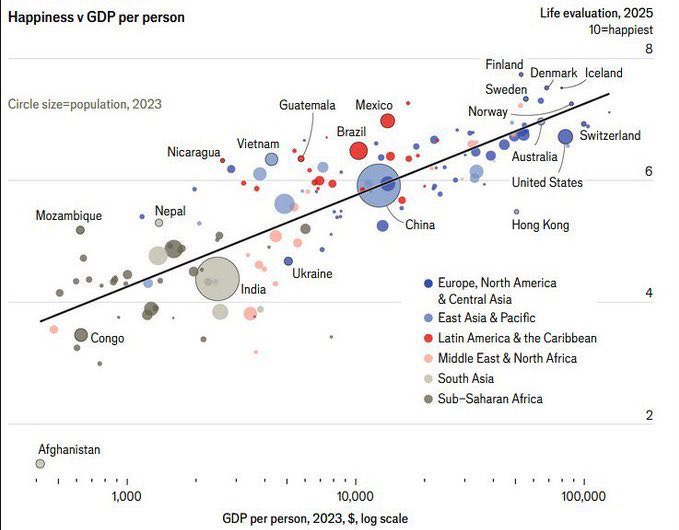
r on this is .80, r2 0.64, p value < 0.000001 (approximated using visual AI) thtose are monster level numbers.
as in so many things, the data is not what many would have you believe and when one starts to look at this in earnest, all manner of narratives get turned on their heads.
it turns out that basically no one is mass immigrating their way to per capita prosperity lately. all the problems, crime, and cultural issues, they are not bringing growth or well being.
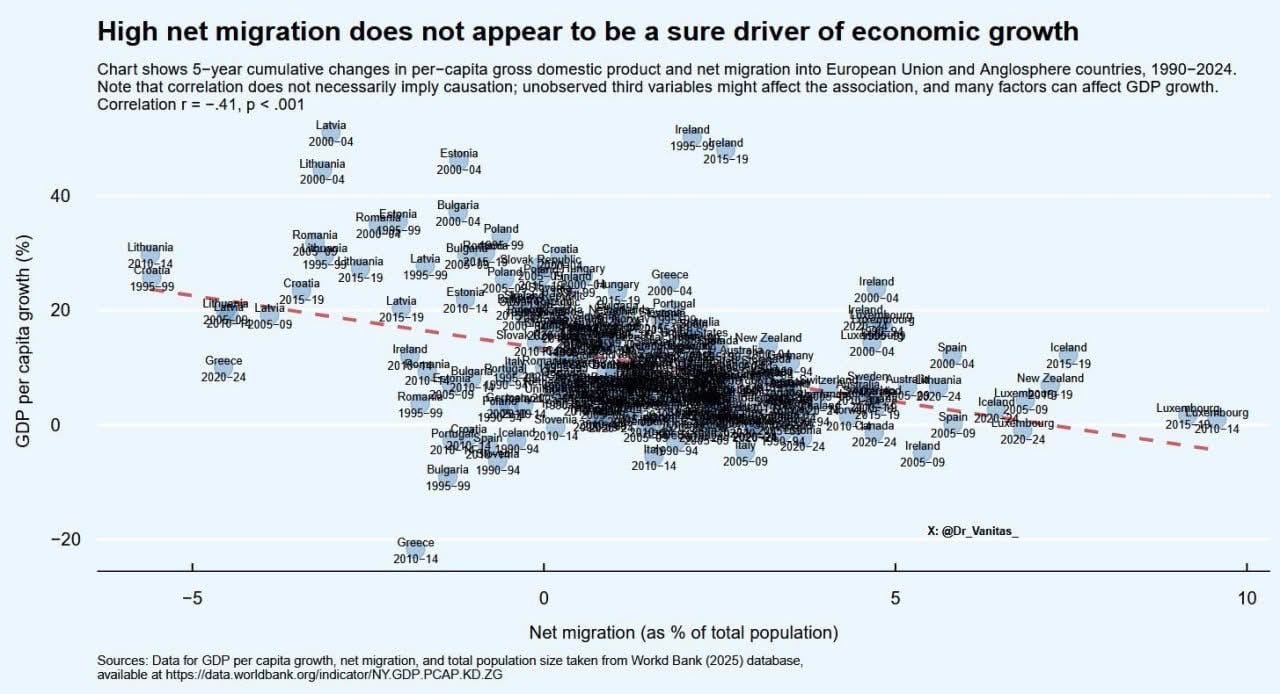
in fact, it’s mostly the opposite.
poland’s population peaked in 1995 and has been declining for 30 years
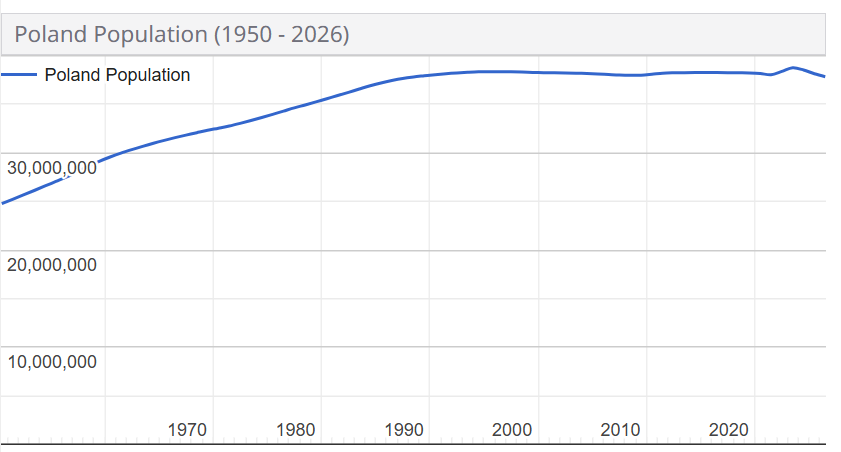
GDP is up over 5X in that period. poland is booming.
lithuania too. all the baltics in fact.
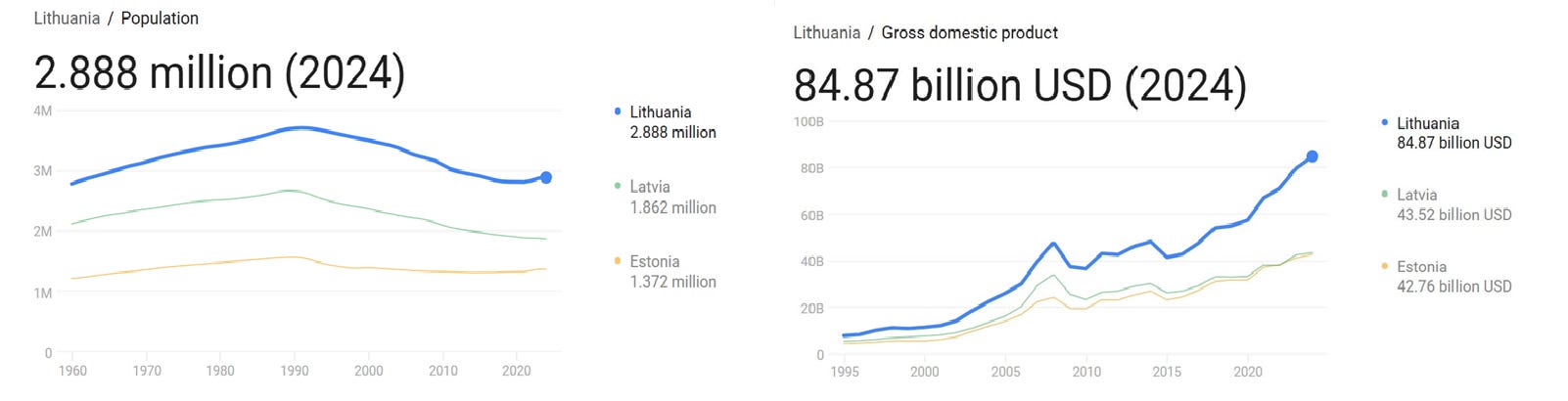
one can easily grow without population growth. you just need good human capital and reasonable laws.
ok señor “cats with stats,” cute trick, but this is all former communist states and you’re using that to salt the sample.
OK, plausible criticism, so let’s take some hard cases.
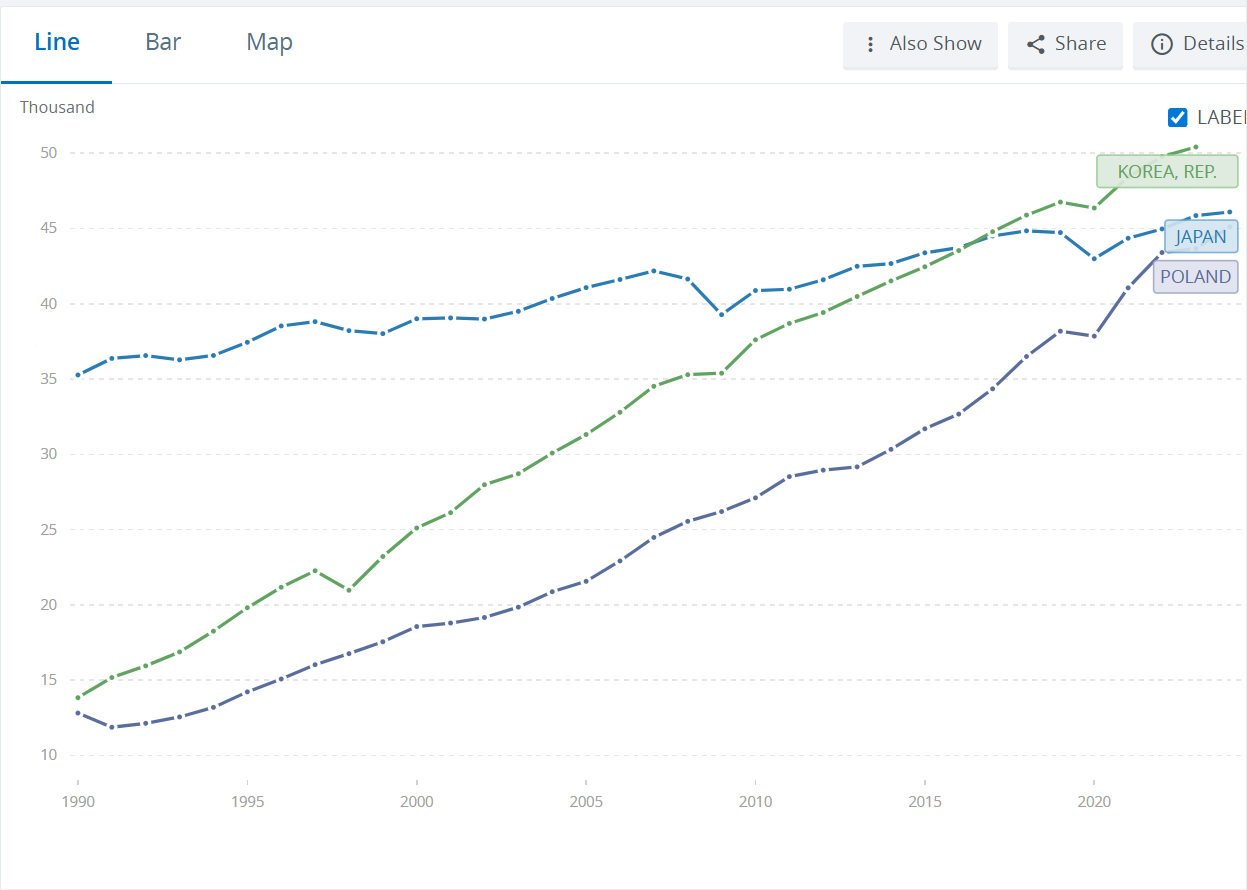
people trot out japan as the “warning case” for population decline. their population peaked in 2008 and has dropped 5% since. their economy has not really grown since 1995.
but japan’s economic problem is not population contraction. they crushed their economy under debt, unaffordability, regulation, and bad corporate structure 35 years ago and have been moribund since. they could not grow when their population was growing either.
south korea had their population peak in 2020 and has declined 2% since.
both get trotted out as “huge problems” but look at the per capita GDP at PPP figures.
they’re all at all time highs.
life in these places is good.
so, to have a little fun, i took continental europe, removed the microstates (like andorra and malta and luxembourg) added scandinavia and the baltics and some of the east and ran a plot of 26 countries.
the results are stark.
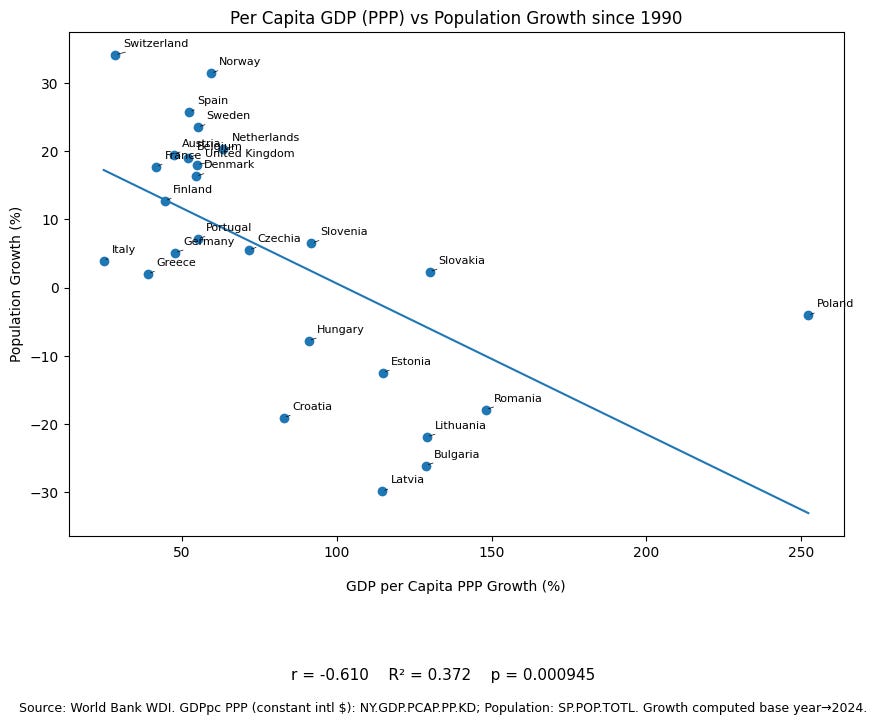
(i tried 2 different timeframes)
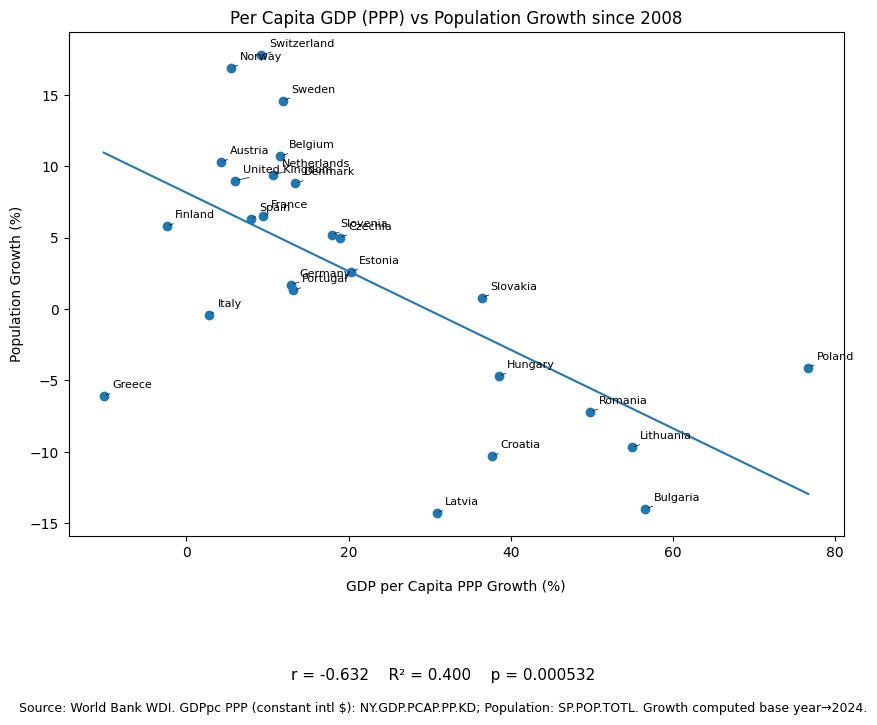
there is a strong (.37-.40 r2 is crazy strong for something this multifactorial) inverse correlation between population growth and growth in per capita PPP GDP and the p values are eye wateringly low. one could, if one sought to be maximally biased against this data claim that it’s an east/west dichotomy, but i find this unpersuasive because 1. even the EU shows no correlation between population growth and per capita GDP at PPP growth. it’s basicall orthogonal. and 2. the two have had radically different policies on immigration so far from being some sort of “rig job” i think it can be more properly termed “a natural experiment.” (and one borne out in japan and korea)
this is not random. this is a pattern and we have a strong, a priori reason to suspect causality. 66% of those recieving burgergeld in germany (welfare) are immigrants. parts of the UK are not poorer than the poorest parts of lithuania or slovenia.
study after study bears this out.
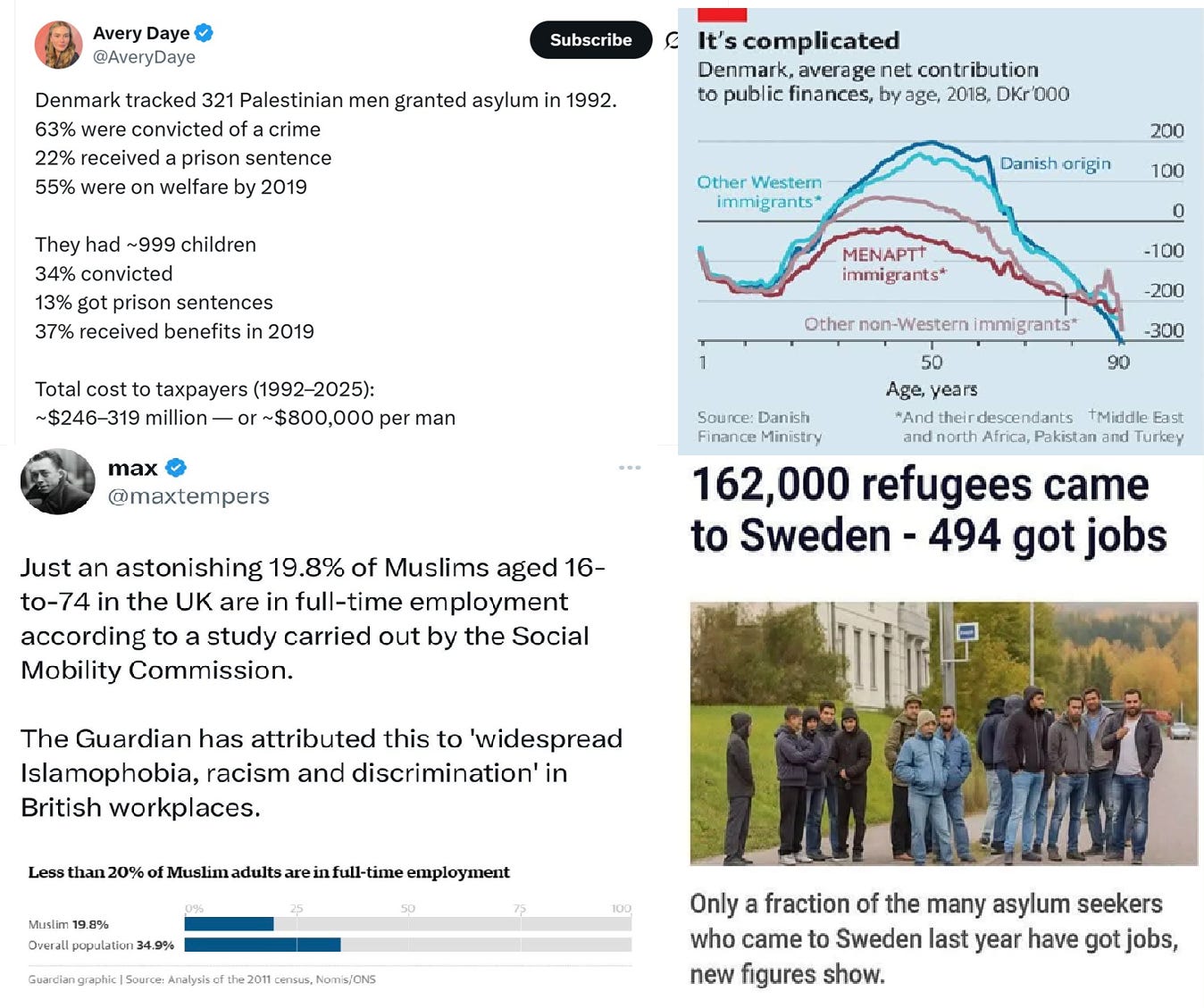
there is nothing wrong with immigration, per se. there is, 100%, such a thing as good, productive, high growth driving immigration, an attracting of the best and brightest and hardest working, the most useful and talented who enrich a nation.
but this is not that.
current immigration policy is a cargo cult mistaking gravel in economic gears for growth fuel and the marker (population) for the actual goal (a wealthy, happy population).
Adam Smith addressed this issue in The Wealth of Nations during his discussion of sub-subsistence wages.
I’d also suggest that the potion of the population on welfare are not only surplus to need but an actual drag on the prosperity of everyone else. By leeching off the productive while contributing nothing of value they actively reduce the quality of life for everyone else.
“We need more locusts!” Said no one ever…until the 21st century rolled around.